Category Archives: Words

Weekly Shot #1: Wiener and Donuts

This week I was having trouble deciding between a hot dog and donuts for lunch one day. I know, this is a pretty momentous problem, and I bet you all wish you could have been there for me in that time of need. But I’m not just someone who complains about things I make no effort to change. What if, I thought to myself, what if I didn’t have to choose?

Makeup

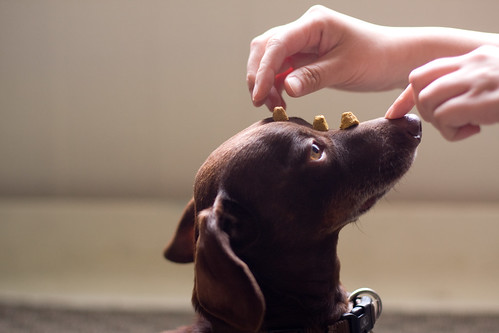
Normally a person would just have them consecutively. Go get a dog, and then have a donut on the way back, or maybe find that a donut makes a lovely appetizer. With the help of Audrey, an eminent wiener wrangler, I didn’t even have to make that decision.

Initial Testing

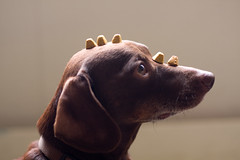
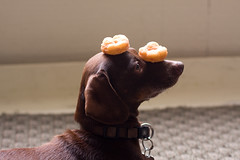
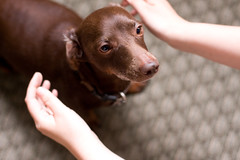
First order of business was to establish that Chorizo, a mischievous dachshund was in the mood to share the stage with donuts. We did this proof of concept with dog treats. But how would he do with succulent donuts, still warm from Trish’s Mini Donuts, down the street at Fisherman’s Wharf?

Proof of Concept   Donut Test

Wow! But we couldn’t help wondering, how far could we take this?

Wiener with Donuts

Three, ladies and gentleman. Three donuts, and three cheers for Chorizo!

More Shot List

And yet no shot list. I’ve made some progress on my shot list, though, and some patterns are emerging. I want to use people other than myself. (I was thinking last weekend that I’ll have to do a series of self-portraits in order to minimize the hassle factor, but the idea of setting up self-portraits engages me less and less the more I think about it.) I want to use animals. And I’m going to need some space.

Coming Out to Be Photographed

The purpose of this exercise is to get images in my head out of my head where other people can see them. This is pretty much the opposite of what I’ve been doing up until now, which has been recording things that anyone could see but other people didn’t notice.

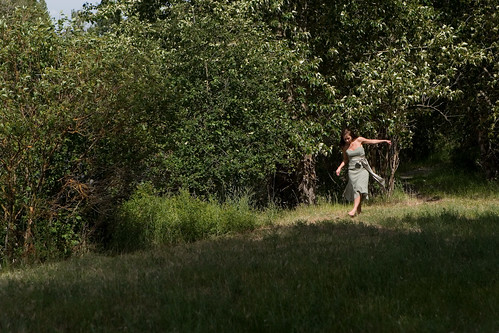
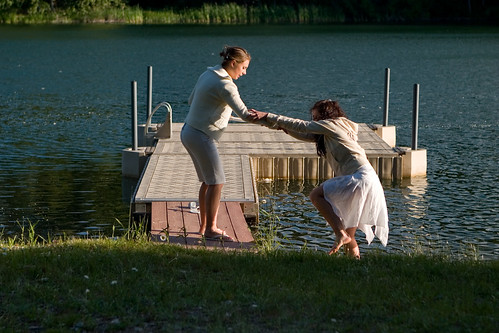
Wading in the Lake

One of the areas of resistance I’ve had to “making” photographs (as opposed to “taking” them) is lighting. There is so much to learn, and the equipment can be expensive or at least require a lot of construction. I like making things, but when I think about lighting, I realize I like making things qua things. That’s going to have to change in a lot of ways if I am to go forward with this, because I’m going to need to make props, too.

Banana Drama

Part of the motivation here is to get a break from the frustration – so common in outdoor observational photography – of missing a shot. I realize that some days I’ll be replacing it with the frustration of not getting the result I want, but learning to close that gap is part of the exercise.

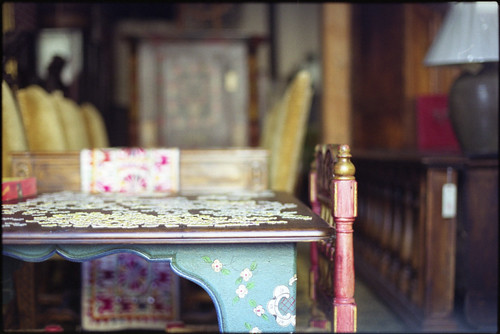
Puzzle

Puzzle

As an exercise to prepare for my weekly shot project, I decided to make a shot list. I want it to have a dozen doable items, and I haven’t managed to write them all out yet. I do have 7 items on it now, but a few of them require materials I don’t have access to, so I want to keep working. I plan to do a shot this coming weekend, thought, whether my list is “long enough” or not.

In the meantime, I’m carrying a camera every day, which I’d got out of the habit of doing, and that feels good. It’s making me realize that it’s a bit of a challenge both to get a lot of exercise every day AND to get out and do photography. While holding down a full-time job. We’ve had a special project going at the office lately that I’m tempted to use as an excuse, but that’s not the reason I’m moving slowly on this.

This photograph was taken through the window at an antiques shop near my office. I took it with a film camera, and I’ve definitely found over the last year and a half that when I need a kick start, it helps to shoot a roll or two. I pick up my most recent two rolls (from developing) the day after tomorrow, and I have another dozen rolls of a half dozen kinds of film waiting to play with. My project will be digital, for practical reasons, but film sharpens the mind and disciplines the movements.

New Project: Weekly Setup Shot

The majority of my photography is urban and nature observation. Over the last couple of years, I’ve occasionally set up shots, and in the last year or so, I’ve started to get – even become preoccupied by – ideas about photos I’d like to build, piece by piece, even a series or several.

Amy Pays Her Respects Amy's Expansive Corner

My first posed subject was my friend Amy. She’s an actor, and she was happy to give over a whole day to me one winter. I think I took something like 400 shots that day. It was a wonderful experience for me, because it gave me a chance to slow down and try a lot of different things – angles, locations, and processing approaches.

"The Poseidon Project"

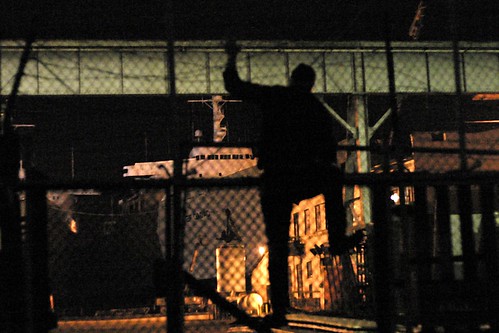
Shortly after that, I participated in a project to create cinematic shots. For almost all the shots, I just kept an eye open for cinematic situations around me and tried to capture them. For one shot, I went out to the piers at night with a friend, and we walked around and looked for good locations, finally making this shot. Again, we had no concrete plan, just a general idea of where we wanted to go, and then seeing how the spirit moved us when we got there.

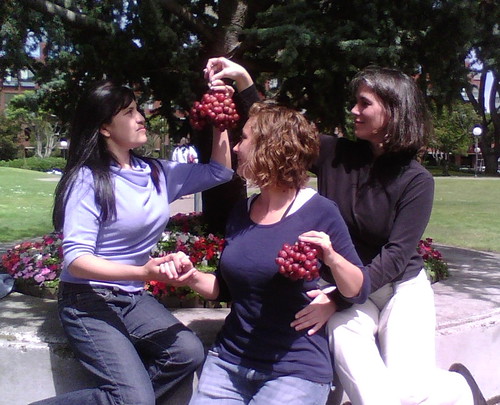
The Three Grape Smugglers

This year I’ve wanted to step up my game, and I’ve made – or at least designed and styled – a couple of shots I am truly happy with. Now it’s time for me to do more, and it has been for a while. I’m going to need help in the form of external pressure, though, because I haven’t been taking the further steps I need to on my own. So this is an announcement of my new project: One deliberately styled and directed shot per week, at least 12, until I finish a coherent series or at least figure out what I want to do next.

Do you have a suggestion or request? I can’t promise to honor it, but I’d love to hear it!

Three-Day Novel

To my great surprise, I did it. I did almost everything differently this year, and for the first time I came out of the weekend feeling better than when I went in.

In previous years, I’ve cleared my schedule, decided not to cook but to buy prepared food locally at mealtimes, skipped exercise, stayed up late, and forbidden myself to have any Internet or social contact for the entire weekend. I’ve also spent the last couple of weekends before the event actively working to outline at least one story idea, sometimes more. I’ve emerged from these weekends feeling sleep-deprived, anxious, and critical, or ended up writing practically nothing after I went ahead and did something forbidden and then lost my momentum.

This time pretty much my only constraints were a cleared schedule and no in-person social contact. I did no outlining and only came close to brainstorming about stories once – on the Thursday morning before the weekend – and was almost immediately derailed. I got at least 3 days of healthy food ingredients that I just plain like, plus some treats for every day. I resolved to exercise for at least 2 hours each morning (and did so, along with another hour in the evenings), and to go to sleep before half past midnight each night (again, success). I did not use an alarm clock. I also allowed myself to check email and a couple of websites a couple of times a day, although I (almost totally) avoided responding or participating.

In other words, I acted natural. I went through each day more or less as a normal workday, but instead of going to the office, I sat and made stuff up.

The process change I was the most concerned about was skipping the outlining step. I did use a structural prompt, though. Contest materials say the average story is about 100 pages, so I made a word-processing document with 100 blank pages, and every time I started to write, I didn’t stop til I got to the end of a page (about 250 words). Sometimes I did two at a time, but either way every time I started typing, I had a specific goal that was, at completion, visible on a single screen. And in a departure from previous years: I ended up cutting words to meet my immediate storytelling goal within my page rather than typing whatever popped into my head. I think this structural decision is the single element that is most responsible for what I see as the tightest, most even writing I’ve ever produced for this contest. Having hour-plus blocks of exercise during which I could think things over definitely helped, too.

I’m not submitting it for judging, but for the first time I believe – rather than take on faith – that I can produce a manuscript in this timeframe that is a credible competitor. This is a new feeling, even after years of confidence that I accomplish something valuable every year. I did do one superstitious thing every night before a writing day: I read through the notes I made about all my noteworthy dreams over the last couple of months (about 750 words in all). I didn’t write my dreams into my story, but it was a soothing, centering exercise that led nicely into sleep.

The 3-Day Novel Contest

Alma Mater

Husky Stadium

While I was home, I took a walk from the University of Washington health sciences center to the Museum of History and Industry, over the floating walkway to Foster Island, and into the Arboretum. Then I came back and followed the cut to the western end of campus and walked into the University District in search of food. Almost every place I’d visited regularly as a college student is vanished now.

I didn’t go to graduate school – I only went to the UW for undergraduate work – so I guess it is the upper campus that is my alma mater. Walking from the District through campus and down, though, was just transportation. I dimly recognized the buildings I’d actually had classes in, but except for a nod in the direction of the Burke Museum (no relation, and which I did not visit on this trip) I didn’t feel any strong pull as I walked past the quad through Red Square until I got to the Rainier Vista. This is the part of campus that marks the shift from humanities to sciences, from languages and literature (which I studied) to chemistry, physics, and biology, and further to medicine and genetics, which brought my mother to the U after she finished college.

That’s to the right. To the left is the drawbridge, the museum, and the path with the floating walkway, which takes you under a freeway and over to the Arboretum. That path is one of the limits of Union Bay, across which I could see where we lived when I was in grade school.

We lived in Union Bay Circle, a complex of student housing for families in which the head of household was a graduate student. My mother was getting her PhD, and every day on her way to the lab she crossed the Union Bay natural area – a former landfill that had only been closed and capped a few years before we arrived. Then it was divided into “management zones” defined by shrubs, woods, waterbird habitat, managed trails, and unmanaged land.

I played all over the nature area, sometimes on walks with my mother, sometimes after school with other children of graduate students, sometimes unattended. It was marshy near the water, and the open spaces smelled faintly of its not so distant past. I played in the Genetics wing, too, and rode my bike and walked all over campus long before I matriculated there. These are my strongest memories of the UW campus, perhaps of anything, and all are from well over 25 years ago.

The alumni association sends out questionnaires from time to time, building their database so they can identify and cultivate donor prospects. It’s been a long time since I opened one of those mailings, and my mother once asked me how I’d responded to one of the questions – something about how much of my success I felt I owed to the university. (It can’t have been worded so baldly, but that’s the sense that stuck with me.) I told her the question bothered me, that the answer was basically, “Nothing.” “That’s not what they want to hear,” she said. Certainly not, but the UW’s bid for my gratitude was lost to them long before I registered for classes there. I already had my soul mother in my real mother; the campus is just where she happened to raise me.

I Kissed a Bitch

From a blog post by a father who wishes he could adorn his children with a magical headband to protect them from the grotesque and misleading imagery out there in the world:

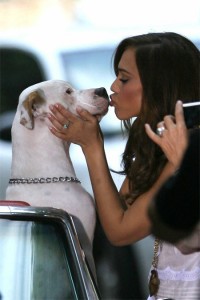
Jessica Alba and Friend

This photo (of Jessica Alba) is used in a post featuring handwringing about Katy Perry, whom this blogger believes is a real danger to girls. As he writes about Perry’s little splash in a post dedicated to considering that danger:

This is an alarming trend as the song itself promotes unhealthy relationship between same sex genders especially for easily impressionable young females. Imagine this song becoming the talk of school playgrounds, neighborhood backyards or even at dinner tables. Little girls experimenting among themselves to see whether if the song is true or not. What would you say as a parent if your daughter brings up the content of this song? Is it ok to kiss another girl? Is it normal? Is it natural?

This blogger came to my attention when he sent a request to follow my Twitter stream (I wonder why he thinks he wants to). Almost makes me want to accept – and then really start twittering. A lot.

Calkins on Robots

David Calkins spoke at this month’s Ask a Scientist about robots. With infectious enthusiasm, he gave a brief overview of how robots have developed, how they’re used today, and what’s likely to happen with them in the near future. “This is Ask a Scientist – not Hear a Scientist Go On and On,” he said, and took loads of questions, all of which he answered with thought and style. And he closed with a delightful show and tell of soccer-playing, cartwheel-turning robots – you know, models that prove and demonstrate useful robotic strategies.

If you think about this stuff at all, the early part of the presentation was familiar ground. We’re not talking about automobile assembly arms or the Terminator series, but Calkins clearly focused on robots doing real work and on humanoid robots. Robots are already allowing physicians to practice some remarkably sophisticated medicine at a distance, including procedures, and remote-control devices reach even further, with several devices exploring Mars today. Back home, dishwashers, Roombas, and other household devices will, he says, continue to populate our homes and handle more of such straightforward tasks. And yes, homes can expect to keep featuring, for the most part, many single-purpose devices rather than being run by magically balancing, multipurpose Rosies.

What’s next? Is it only a matter of time before SkyNet becomes aware? Calkins says no; he believes that robots will never be alive, although they will continue to have their capacities for emulating human interaction refined. Because humans like that. He’s up front that ethics is a big issue for robotics, though. One of the most interested parties in robotics development is the US military, and if killing at a distance, say, by dropping a bomb from a plane, is a little “too easy,” psychologically speaking, how about killing at a distance where your interaction with your targets is represented on a screen? Not unlike a video game – right down to the operator being at little to no personal risk.

This isn’t Asimov’s-laws stuff. Does your Roomba need know you’re human, let alone have a working definition of harm? But robots that are in a position to intervene around humans can’t use overly simple rules like “do no harm;” they may have to manage, or accurately screen for human input, issues like “which figure in this room is the hostage taker?” At a time when robots can’t generally tell a cardboard cutout of Princess Leia from the real thing, a big dose of humane thinking has to stand between a robot and a robot carrying weapons.

The biggest limits on robots in the immediate future, says Calkins, are mainly about batteries, although ethics guidelines are a big need. He sees a lot more robotics being used in medicine, naming increasingly sophisticated control of prosthetics as a promising area. He wonders aloud whether people will start lining up for prosthetics as they become better (stronger, faster) than original human equipment. He sees this as a 10-year concern, although it’s hard to imagine medicine moving quickly enough to make prosthetic placement easy enough on the part of the body where a device is attached to make elective amputation attractive.

And then there’s just plain fun. Calkins is the founder of “the only event in the world that both Geeks and Jocks agree on:” RoboGames. “It’s kind of like a weird family reunion,” says a participant in a short video posted at the website. The single-minded focus and engineering ethos of participants – taking what they have and making what they need … or really really want – helps illuminate some of the cultural reasons that this is an area that is big on working models and light on formal policy statements. “Real men don’t have hobbies – they have obsessions.”

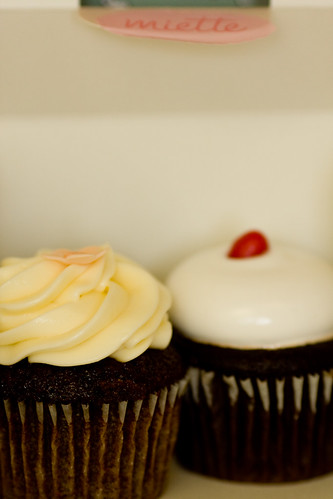
Afternoon Delight

Yesterday afternoon I needed a little pick-me-up, and I got it at Miette, at the Ferry Building. Miette offers a seasonal selection of cakes and cupcakes, tarts, cookies, and candies. They also make a wonderful pot de creme (a custard dessert).

I kept going back and forth between the gingerbread with cream cheese icing (foreground) and the “old fashioned” – chocolate cake with meringue (and a candy-covered peanut). What I left with will come as no surprise.

Afternoon Delight

Robots! This Week in San Francisco

The human love affair with robots dates all the way back to ancient Greece, whose lore told that Hephaestus made a man of bronze to defend Crete. They are splendid screens for our projections, for our fantasies and fears, and populate countless works of fiction, opinion, proposal, and speculation. In real life, robots pick up dog hair and assemble cars and stuff.

Ask a Scientist: This coming Wednesday, David Calkins will talk about artificial intelligence and real-life applications of robotic technology. Also, he’s bringing along some ROBOTS! The format is a medium-length talk followed by a question-and-answer session. Ask a Scientist is held at the Axis Cafe, which serves light meals, coffeeshop drinks, beer, and wine. Get there early if you want a seat at a table.

Wednesday, August 6th, 7:00 PM: Robots, David Calkins, at Ask a Scientist

Down to a Science: Professor Goldberg is investigating questions raised by robots and social networks. His group is interested in leadership, group discovery, and the power of crowds. The format is a brief talk by the expert followed by a highly interactive question-and-answer session. Down to a Science is held at the Atlas Cafe, which serves coffeeshop drinks, and soups, salads, sandwiches, and pizzas. Get there early to get a seat – this venue is small, and it attracts more people than it has chairs.

Monday, August 18th, 7:00 PM: Robots and Representational Democracy, by Ken Goldberg, at Down to a Science

The Long Now Foundation: If robots are a little too concrete for you, there’s the Long Now talk Friday at Fort Mason about software bots. Daniel Suarez, author of thriller Daemon and a software developer, will give a talk about the growing use of these bits of programming – and the risk of unintended consequences as we use them more frequently for more tasks. The Long Now talks are extended, relatively formal talks, in an auditorium. The talk itself will likely be more than an hour, and Long Now talks in general focus on long-term thinking (the organization’s mission is to work within a framework of 10,000 years).

Friday, August 8, 7:30 PM: Bot-mediated Reality, by Daniel Suarez, at the Long Now Foundation

Robots!