Category Archives: Crafty

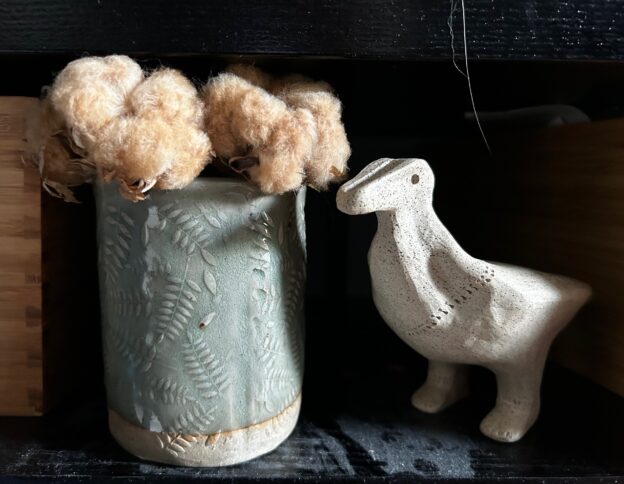
a ceramic cup with cotton bolls in it, like a vase of flowers, beside a ceramic bird rattle

Heritage Cotton Varieties

The cotton boll sits fat and fluffy, like a miniature sheep tucked among curling brittle leaves, ready to be shorn. This one is still on its stem, sitting in a cup with several others, a bouquet of billowy brown flowers, whisper soft on the fingertips, like cotton candy made with maple syrup, like yarn waiting to be spun. The variety is Nankeen Brown, named for Nanjing, China, where the brown-lint cotton was grown and processed into fabric in the 18th and early 19th centuries, setting off a brief craze in Europe. The cotton sank out of commercial interest once synthetic dyes could routinely produce the khaki color of the finished product. It’s not just simpler to use white cotton; colored cottons have a variety of specialized handling requirements for best results, and commercial white cotton varieties generally have a longer staple (fiber length), making them easier to spin and more resistant to abrasion during spinning, weaving, and wear—an attractive quality as textile production shifted to powered machinery, which was tough on the finer yarns seen in historical textiles.

Brown is not the only colored-lint cotton, although others saw large-scale production even more rarely. Green-lint cotton, another short-staple variety, was briefly pressed into service for uniforms during World War II to get around a shortage of dyes. But in South America, green, brown, and pink (usually a pale blush color) cottons have been grown traditionally for thousands of years, used for embellishments on clothing, along with a variety that is a subtle off-white. Modernly, these native varieties are grown with encouragement from the Native Cotton Project, established in the 1990s to support heritage textile work (and offer an alternative to coca cultivation). Cottons cross-pollinate easily, so growing different colors is a logistical challenge. (If I won the lottery, I’d build a set of greenhouses and grow at least 3 varieties, maybe more.) And sometimes the color is regarded as a fault. “Oh, Maud, we have a problem, because the beige cotton, the light brown cotton, this year didn’t really grow beige,” growers sadly told Maud Lerayer one year. Her home goods company in Brooklyn, Behind the Hill, partners with indigenous growers in Guatemala (and a group in India). The cotton was pink. She reserved the whole crop. 

I grow only a few plants a year. I love their richness and their call to a time when more of us lived closer to the sources of our material culture, and did not just roll with such surprises or buy our way out of them but tended and explored them.

Southern Exposure Seed Exchange sells many heritage seeds, including cottons. In addition to Nankeen brown, they offer 2 green varieties and another brown called Sea Island (Gossypium barbadense) that combines brown color with the longer staple of commercial white cotton.

James Vreeland, who identified surviving naturally colored cottons in the course of work in South America in the 1970s, went on to champion the Native Cotton Project. In 1999, he published an article charting this work, The Revival of Colored Cotton, which has delicious photos.
https://www.gistyarn.com/blogs/podcast/episode-136-heirloom-naturally-colored-cotton-in-shades-of-pink-with-maud-lerayer-of-behind-the-hill

Silly but Useful

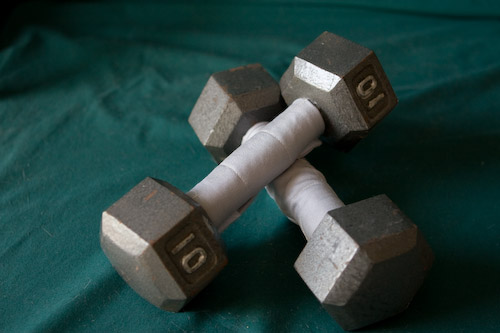
I’ve been trying to use dumbbells lately (mostly as wrist supports for pushups), and I find I don’t want to touch them because they are cold and a little rusted, so I made handles for em.

Sillybutfunctional

They work! These are just a slightly off-square quilted piece with velcro sewn into the corners. Fully machine washable for when they inevitably become gross, and a helpful mini test of some quilting material I got (there’s a thin strip of cotton batting in each one.

Cat Pant

In August, one of my Daily Things was cat pants. My mom converted some sweats to shorts, and I hemmed up the other sides of the cutoff legs to make tubes. My mom got a fancy new sewing machine with all kinds of crazy stitches, so that added some fun to the project.

I am going completely bonkers, though, because Mr Bun has been playing with the cat pant for WEEKS now, and I still can’t get a good picture of him in action. One day soon!

Back to Daily Thing

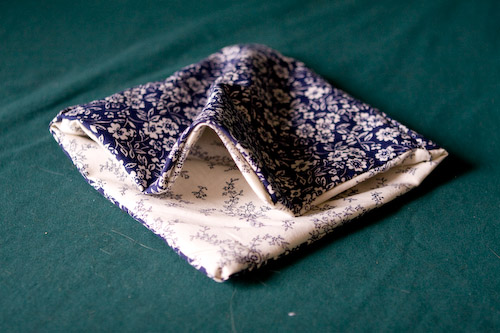
I took some time off going out of town a couple of weekends in a row, but I still got a few things done, which I’m finally documenting. Here is a proof of concept, about 5 inches on a side, of a new cat bed I’m making.

The final piece will have fleece on the inside and wool on the outside, be circular, and will have quilting on the bottom side, but I wanted to piece it together and figure out how I would finish all the seams before I actually cut into the fabric (which is pretty nice). Before I sewed this, I sketched it on paper and then pieced one together with tape and napkins, and those exercises were very helpful. This little fabric piece came together in about 5 minutes and disproved a concern I had about how I should pattern it, so it was both very satisfying and genuinely helpful.

Mr Bun stuck his head into it but declined to be photographed.

Daily Thing #6

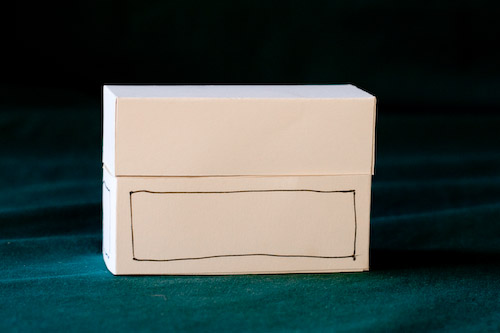
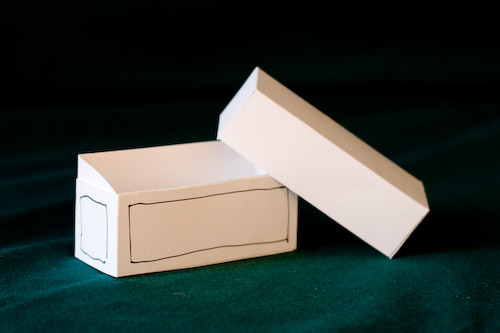
I found this pattern for a simple paper box at Evil Mad Scientist Laboratories, a favorite destination for me. I printed out the pattern in February but never made one for Thing-a-Day – I was too concerned about how bad my cuts would turn out to be. I finally sat down and decided to brave the clumsy cutting.

Behold its sloppy seams and uneven edges! Also, because the material is thin and unlined with tissue paper, the top falls off. Nevertheless, a successful first outing. It’s always good to remind yourself how much easier doing a good job looks once you just plain finish a not-so-great one.

Daily Thing #6
Daily Thing #6-2

Daily Thing #4

The last couple of textile toys I’ve made, I’ve made more or less freehand, with no real planning beyond maybe a light sketch to guide me in cutting pieces out. One of the things that happens is that what I cut out is the “wrong” size. It’s not seam allowance – I am reasonably familiar with my sewing machine and my stitching options, and my seam allowances are fine. But I find that when I get the pieces partly assembled, I don’t have quite enough room to close the piece entirely, or am worried I’ll have to do a lot of hand-sewing that won’t stand up to cat play.

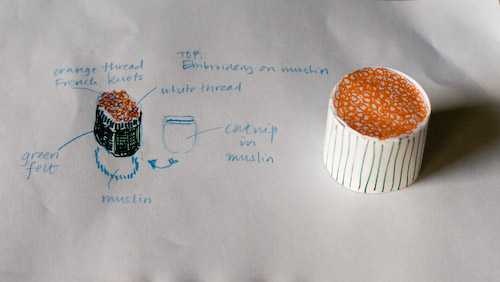
Tonight I decided to go a little further, starting with a detailed sketch of a proposed toy, including all the pattern pieces, where the stitching goes, where the detailing goes, and notes about all the materials. For this example I chose a sushi. It’s a simple shape but not obvious if you want to use a sewing machine for close to all the major seams.

I initially worked out piecing this together in my head on a bike ride, during which I realized that the way I wanted to assemble it (with a pretty good chunk of embroidery for detailing the top of the sushi roll) would involve LOTS of hand-sewn thread, which is not a great thing for a cat toy – too easy to loosen and possibly swallow. That made this object a particularly good choice for that standby of the user-interface designer: the paper prototype!

Sushi pattern and model

I think I’ll be doing more with paper—just for itself, too.

Daily Thing #2

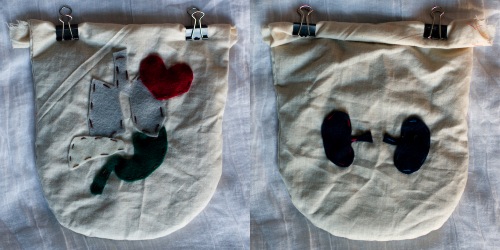
Daily thing #2 is the internals of something I’ve been meaning to finish for months and, I hope, will succeed in finishing this month. It involves at least 2 more big pieces, one of which will probably be pretty time-consuming, so … baby steps.

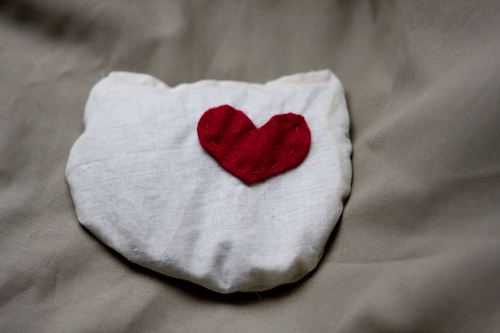
Anyway, here is the “peritoneum” – it’s for a seed-filled toy, and this is the inner bag that holds the seeds. It’s only clipped shut for now, because I need to pick up some more seeds before I sew it shut.

No, I wasn’t trying to say anything about blood supply in the kidneys – I was just using leftover pieces of embroidery floss, and I didn’t have enough to do all the appliques in a single color.

I briefly thought about putting a spine and part of the ribcage on the back, and then I remember this little thing will be boneless.

Daily Thing #1

Day 2 of August, my second round of making something every day for a month, and I did succeed in making something (and testing it, even). I also found the registration form for the 3-Day Novel Contest, which runs over Labor Day weekend. Most years, I try to be scrupulous to journal daily during the month of August as a way both to flush the pipes of my worst self-indulgence and get in practice sitting down and writing even if I don’t feel like it.

Making my daily thing something that isn’t writing might make this harder – I guess I’ll find out in September!

Anyway, here is my first thing: a Flying Spaghetti Monster cat toy. I dithered for a couple of weeks over putting this together, because my first couple of tries really didn’t work at all. This doesn’t match my vision, either, but, hey, the FSM is filled with catnip (little-known fact!), and Mr Bun embraced it with all 4 paws.

In Process!

I couldn’t finish the whole of Thing 28 by midnight, and it’s a gift, so the main part I have finished is not ready for publication, but this secondary part is, and it seemed like a fitting end to Thing-a-day. This is a bean-bag toy’s innards – a muslin peritoneum filled with flaxseed and with a little something inside that can easily be felt when the toy is assembled. A fitting finish for this month!