
So gorgeous illustrations for free cookbook, available in IKEA stores in Sweden. More

So gorgeous illustrations for free cookbook, available in IKEA stores in Sweden. More
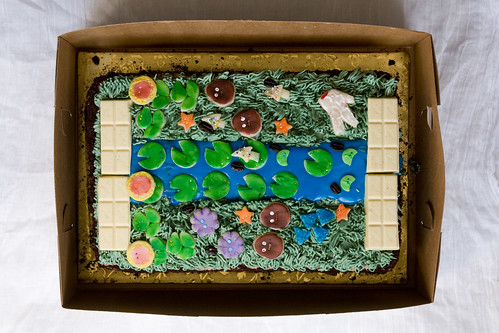
I decorated this PvZ cake for Lisey’s birthday. The plants are marzipan with colored icing and sprinx for eyes. The walkways on either side of the pool are white chocolate.
I ordered a cake with a green top and brown sides, and the baker spontaneously thought to make it look like a block of sod – she did a great job! The icing base is light brown buttercream, with the green spritz on top and with crumbled chocolate pressed on the sides. Happy birthday, Lisey!
… whether Mark Hurd (recently of HP) sexually harassed the contractor who filed a complaint against him. HP decided it didn’t like Hurd’s bookkeeping, and that’s that. But whatever happened between him and that woman, Business Insider is acting like a bunch of woman-hating jackasses blathering about her being an “gold-digging E-list actress” and describing her as “posing as a marketing consultant.” I’ve worked in advertising a LONG time, and posing is part of the marketing business, for one thing.
No, I’m not linking to the article. It’s easy enough to find, and I am not interested in referring traffic.
I subscribe to a newsletter of theirs, and it was infuriating to see a chart praising Mark Hurd side-by-side with these gratuitous remarks. Maybe HP’s board is wimpy. Maybe this woman is acting in bad faith. Maybe Mark Hurd is an executive genius. Not one minuscule part of that story benefits from smearing her.
I’ve had cats all my life, and like everyone else with a pet, I spend a lot of time thinking about what my pet is doing, wondering what he is thinking, and, of course, being pleased by all the cute things he does.
“Some people say my cat is a child substitute, but his pediatrician says that’s not true!”
Humans do every mammalian thing to extreme. Hey, Aphid-farming ants: bow down before the sheer scale of the manure pits alone on a pig farm. Sex? We (sort of) conceal whether we’re ovulating—that’s how interested we are in getting it all the time. Caring for young? What mammals even come close to the prodigious and promiscuous capacity for adoption—within and outside our species—of humans? (Even if it does seem like half the people you meet must surely have been raised by wolves.)
My cat’s not [strictly|exactly|only] a child substitute. I am his mother substitute.
And it turns out this works for dogs, too. Research has examined the conditions under which we learned what we think we know about alpha canine behavior (from wolves from different families, grouped in captivity, and thus in competition for attention and status). Like cats, and probably every other mammal on the planet, the most essential bond in wolves in the wild is the first-degree family bond, particularly (from a “pecking order” point of view) parent and child.
Such research has also prompted criticism of dominance displays for dog training, like those advocated by The Dog Whisperer, labeling as cruel the technique of rolling a dog and pinning it at its throat. This doesn’t mean that you don’t effectively train a dog by making sure it knows you’re the boss, just that you shouldn’t be a toxic boss. From the same article:
Says Bonnie Beaver, former president of the American Veterinary Medical Association (AVMA): “We are on record as opposing some of the things Cesar Millan does because they’re wrong.” Likewise, the American Veterinary Society of Animal Behavior (AVSAB) issued a position statement last year arguing against the aggressive-submissive dichotomy. It is leadership by showing a good example, not dominance, that AVSAB says owners should strive for in relation to their dogs.
Your house, your rules—just like any good, involved, boundaries-setting parent.
Christian Science Monitor can still surprise me. Who expected it to publish these phrases? Monkeys hate flying squirrels, report monkey-annoyance experts: Japanese macaques will completely flip out when presented with flying squirrels, a new study in monkey-antagonism has found. The research could pave the way for advanced methods of enraging monkeys.
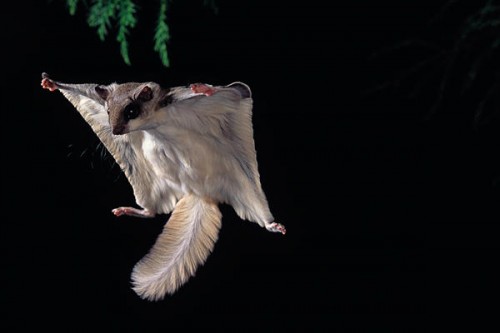
One of the most effective ways to annoy a monkey is to place it in proximity to a flying squirrel, a new study of Japanese macaques has found.
Also, monkey-annoyance expert?? HELLO, DREAM JOB.
Spiders are not repelled by chestnuts:
I have a soft spot in my heart for the Newton Meffage Paq (with handwriting recognition!), but I never realized how absolutely essential it could have turned out to be.
Edited to add: This video is now unavailable.
In an experiment of one, Dr. Kessler tested his willpower by buying two gooey chocolate chip cookies that he didn’t plan to eat. At home, he found himself staring at the cookies, and even distracted by memories of the chocolate chunks and doughy peaks as he left the room. He left the house, and the cookies remained uneaten. Feeling triumphant, he stopped for coffee, saw cookies on the counter and gobbled one down.
“Why does that chocolate chip cookie have such power over me?” Dr. Kessler asked in an interview. “Is it the cookie, the representation of the cookie in my brain? I spent seven years trying to figure out the answer.”
The two gooey chocolate-chip cookies are Chekhov’s gun. Maybe a scientist has to spend 7 years figuring this out, but any student of literature knows that the deliberate introduction of such a compelling device demands that it have consequences.
That said, the larger point, that by combining fats, sugar and salt in innumerable ways, food makers have essentially tapped into the brain’s reward system, creating a feedback loop that stimulates our desire to eat and leaves us wanting more and more even when we’re full, is an interesting one. The End of Overeating: Taking Control of the Insatiable American Appetite is the book he wrote about it.

