Category Archives: Science

Placebo Success

Before the study began, researchers explained to the parents and the kids, aged 6 to 12, that the dose extender contained no active ingredient. After eight weeks, the symptoms of ADHD had grown more severe in kids who took only a half dose, but they remained stable in the groups that received either the full dose or the half dose plus placebo.

It’s very interesting to see this done with ADHD and stimulants, I guess partly because “stimulants” retain their association with recreational and addictive drug use, and “dose extenders” recall some of the ritual replacement people can use when they are trying to break a dependency. Obviously it’s only suitable with drugs with certain kinds of modes of action—it would spur the development of antibiotic resistance to use this method to “stretch” antibiotic supplies in a stressed environment, for example.

Kids in the ADHD study were told that, “the mind and body work together in interesting ways and placebos are known to work sometimes but no one knows why,” while researchers told patients in [another trial, in irritable bowel syndrome] that placebos “have been shown in clinical studies to produce significant improvement in IBS symptoms through mind-body self-healing processes.”

I like this approach, because it explicitly brings a broader inclusion of factors in the patient’s well-being into the doctor’s office. I think it has the potential to improve medical care in a number of ways, from reducing harm (potential side effects) to helping patients feel less buffeted about by what’s brought them into the doctor’s office in the first place. It would be interesting to see some of this work combined with what we’re learning about the better outcomes in people who simply comply diligently with medication instructions—no matter what they’re taking.

Read the whole article, It May Be Fake, but Trust Me—It’ll Work, which also talks about the variety of placebo effects and some of the limitations to consider before putting them to use.

The Computer Doth Protest Too Much, Methinks

So I was thinking about whether it would even be worthwhile for space aliens to come all the way to our pale blue dot, steal our water, and pack us into meat lockers. It seemed like a logical place to start might be with some assumptions about energy, desalinization, and nutritional value. This sounds like a job for Wolfram|Alpha!

I asked a few oblique questions and got somewhat but not terribly satisfactory answers:

Huh, OK, but I was hoping for an approach that would come closer to using every part of the animal, if you will.

I just asked outright:

Oh, you don’t like that at all, do you?

Maybe you just want a more specific question:

Now that I think about it, maybe you’re right, and we shouldn’t continue this conversation after all.

Update: I ended up using a rough estimate of human heights and BMIs, less 14% (skeletal weight) and multiplied by the USDA estimate of calories per 25% fat ground beef. I’m sure that’s close enough for my purposes. Feel free to contribute any other suggestions. Oh shoot, I probably should have used pork.

Wrong Side of the Tracks

Science has always been a craft-based activity and the best scientists tend quite literally to be “hands on”. […] Gentlemen do not get their hands dirty in that way. So the greatest of British scientists have tended to be from the fringes of the UK, geographically or socially. The two towering figures of 19th-century British science were Michael Faraday and James Clerk Maxwell. Faraday, Mrs Thatcher’s favourite scientist, was the son of a blacksmith and an adherent to an obscure religious sect, the Sandemanians. Maxwell, the brilliant theoretical physicist, was a Scot.

The Secret Sex Life of Marie Curie and the personal dimension of practitioners of science.

What are you eating?

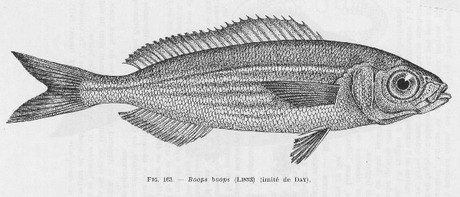
I once went into a few local restaurants to surreptitiously test the tuna they served. Some tuna was tuna, some was grouper, some was Nile perch, but all of it looked the same when cooked. In many cases this is not a case of restaurants misleading customers, or even being mislead themselves, but simply a problem with the length of the supply chain. The more intermediates that a piece of fish has to go through to get from the boat to your table, the more chances there are for it to be misidentified.

Southern Fried Scientist (commenting on a TED talk by Stephen Palumbi) on a challenge to supply-side conservation.

Got Parasites?

Throughout 2010, the folks at Parasite of the Day have been exploring those hardy stowaways of the animal kindgdom. Now they are counting down the 12 Parasites of Christmas. Each entry offers the opportunity to vote—interesting, cool, funny, or yuck!

Shown, that quintessentially holiday parasite—and subject of December 17th’s Parasite of the Day—mistletoe, in a vintage postcard collected by Cheryl Hicks.

They Came from Mono Lake

By turns delightful and serious discussion (and links roundup) of the teaser, FREAKOUT ALL OVER THE INNERTUBES, and explanatory voices of reason that emerged this week around NASA’s arsenic-in-a-pinch-using microbes from Mono Lake (plus a brief coda on an invader we’ve been struggling with for a while now: HIV) at On science blogs this week: Alien abductions (NASW).

Occam’s Razor Is Too Dull

This strikes me as rather sad, not least because it has the potential to (perhaps inadvertently) hold back some really interesting work:

ABSTRACT: From the process of organic evolution to the analysis of insect societies as self-organizing systems, biology is full of awe-inspiring examples of complexity arising from simplicity. Yet in the contemporary study of animal cognition, demonstrations that complex human-like behavior arises from simple mechanisms rather than from ‘higher’ processes, such as insight or theory of mind, are often seen as uninteresting and ‘killjoy’, almost a denial of mental continuity between other species and humans. At the same time, however, research elsewhere in psychology increasingly reveals an unexpected role in human behavior for simple, unconscious and sometimes irrational processes shared by other animals. Greater appreciation of such mechanisms in nonhuman species would contribute to a deeper, more truly comparative psychology.

“Clever animals and killjoy explanations in comparative psychology.” (essay; Sara J. Shettleworth)

Medicinal Laughter

In light of these findings for positive wellbeing, as well as of the complex conceptual content of sense of humor, it is possible that sense of humor is best conceived of as one aspect of a broader psychological characteristic that facilitates a general state of wellbeing, rather than a specific emotional state of mirthfulness.

In an endearingly not particularly funny article, Mark Crislip at Science-Based Medicine explores laughter as medicine and sense of humor as a marker for health (and touches on something I’ve always suspected: the more you complain, the harder you are to kill).