In the fitness community, there’s a lot of hand-wringing about women who shy away from challenging workouts, particularly lifting weights, because they don’t want to get “too big” or “bulky.” A typical formula for “addressing” this concern is to deny the possibility – to claim it’s “impossible,” relying on physiologic factors like testosterone level or, making the leap that such a description can only apply to competitive bodybuilders, to then “reassure” women that it takes years of work and careful supplementation to achieve that size.
Somewhere along the way, people in the fitness community have forgotten that women are bombarded with images about how important it is to be small, often in high-circulation print and broadcast media where more money is spent on advertising alone in a single quarter than the fitness industry generates in a full year. And for many women, those are not the most damaging messages. That distinction belongs to the personal remarks made by people in their lives.
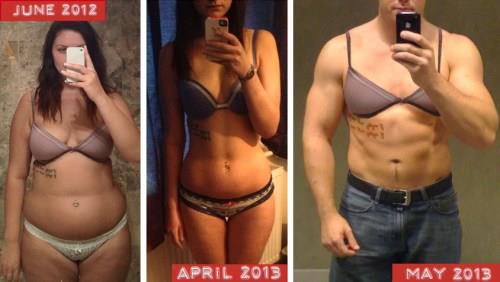 Best part? In May she got a 20% raise at work!
Yes, Virginia, women do get told “You don’t want to do that – you will get big” or, as I was once told by a man pinching my biceps, “That’s not attractive.” I was lucky – it was pretty obvious to me that the guy was being a jerk, but women get these messages from people they love and who love them, too. When it happens it can be confusing and upsetting. There are a lot of factors at play, and suggestions like “use x snappy comeback” or “ignore and move on” are not sufficient responses to women’s concerns in this area.
Where does it come from?
Let’s stipulate that there is a lot of sexist societal baggage about acceptable size and strength for women, without worrying too much about what, exactly, that size is. I hope this is not controversial. I talked about some of the challenges women have faced in this area a few months ago, on the occasion of International Women’s Day.
We can also look at the covers of women’s magazines – no need to look inside. I hear people dismiss this media as if it’s foolish and irrelevant. There is some truth to that, depending on your demographic, but publishers aren’t in the charity business. These magazines survive and thrive because they have big, paying markets. Even not-terrible Women’s Health, which occasionally admits right on the cover that some women are more than 40 years old, has typically diminishing, critical cover messages:

These messages did not invent the problem, and indeed most media producers insist they are merely offering what women request. They are selling solutions for a need that many of us carry with us already: to be more attractive, more organized, healthier, happier. Media is under pressure to provide solutions rather than open-ended methods. So while most people can achieve those goals only with careful introspection, planning, incremental change, and frequent re-routing as they discover the right path, well, hey, that message won’t sell magazines – let alone fit on the cover.
“Don’t touch that – you’ll get hurt!”
When we are children, we receive warnings from our caregivers – be careful, it’s hot! Wear a helmet when you ride your bike! Don’t dive in shallow water! Social learning means we don’t have to make all the same mistakes that other people have made – we can learn from others (and go on to make new mistakes). This works for many reasons – kids do some of that stuff anyway, get hurt, and realize the warnings are meaningful, sure, but most of us, from early in childhood, want the good opinion of those who matter to us.
As we get older, the messages get more complex, bound more tightly in societal expectations. The landscape is complicated by competing sources of pressure and approval. If you do that, it will go on your permanent record. If you don’t do this, you won’t get into a good college. Girls get a big dose of Don’t do that – boys won’t like you. Or worse, Don’t do that – boys won’t respect you.
Unfortunately, the toothpaste is out of the tube: there’s plenty of boys out there that don’t respect you, and never will. And the more you do to become respectable – even admirable – the less they’ll like it. A friend of mine summed up the extreme of this attitude in “Douche V’s” Reasons Why Toronto is the Worst City in North America for Men, which includes a run-down of this character’s profile in the “Pickup Artist” community. If you’ve heard about these people and don’t want to follow the link, here’s the take-home message: this pickup artist finds Toronto an unwelcoming environment because it is difficult to “date up” – hard to get the attention of women who have better education and pay rates.
I bring these guys up not because they’re particularly important. Most of us will go our whole lives without ever being approached by someone like this. But they’ve codified a particular style of approaching strangers that they call “negging” – starting with a backhanded compliment or calling attention to a defect or failure, to get someone off balance and prime them for seeking approval. Pickup artists defend this practice as “banter,” and say everyone is having fun, but teasing, potentially insulting humor generally works best among people who already know each other well. Parodied by xkcd, negging attracts some pretty angry responses — it’s a bad-faith way to approach someone, and the fact that it can “work” (ie, lead ultimately to a one-night stand) can make it look predatory.
In the pickup artist community, one of the high-visibility members likes to take credit for inventing the “neg,” but this is absurd. We’ve all been negged over the course of our lives, often by family members, other kids at school, maybe even our teachers, sometimes by coworkers or friends. It’s a time-tested technique of bullies. And it is exactly what is happening when a stranger or a close friend or family member tells a woman anything along the lines of “why are you lifting weights? That’s not attractive.”
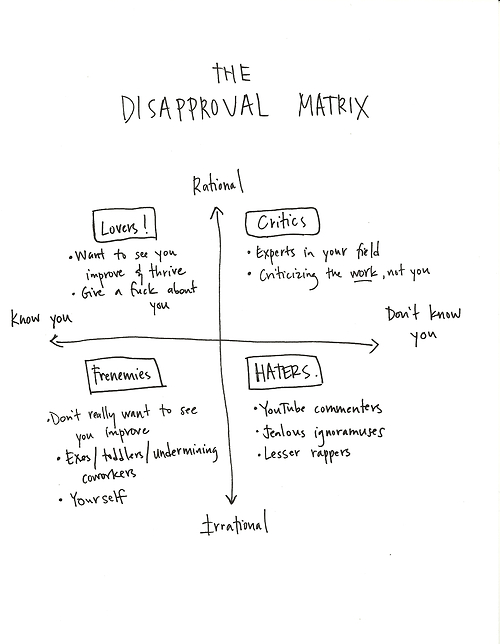
How do you respond to someone who is trying to diminish you?
A stranger approaches you as you do farmers walks. “They’re going to work your traps. Guys don’t like girls with traps.”
A family member, present when you happily report a personal best, says, “That is stupid and disgusting. Girls don’t LIFT 105, they WEIGH 105.”
A casual acquaintance at your gym says, “You’re doing great, just don’t go overboard … you don’t want to lose your femininity.”
These remarks represent expectations about what women are, and what women want, that may or may not have anything to do with what matters to you. They may represent an honest difference in opinion about what “femininity” looks like. They might just be a lightly veiled way of saying “I like you less than I used to.”
We tend to have one of three responses to such challenges. 1. We may disagree with them, and simply reject them – “Do I look like I care what you like?” 2. We may agree with them, but disagree with the recommended change in behavior – “I haven’t weighed 105 since I was 10 years old, and I don’t expect to see it again while I’m alive.” 3. We may agree with them and doubt our course of action – “Yes, I am making good progress, but am I risking something I value in the process?”
When a stranger says these things, it is easy to have Response 1, but they can be confusing when they come from a loved one. Family relationships don’t guarantee kindness — family members or close friends may be more likely to speak impulsively or unkindly, and then use the “trying to help” or “being honest” defense, because they know the connection gives their remarks power, even plausibility. Women can be vulnerable to this approach, because they are so often reminded throughout childhood that they should keep their voices down, avoid confrontation, “be good.”
What you say in these situations is less important than how you think about them for yourself. A nonplussed silence is a good option in public situations with strangers – there is no good reason to escalate an unpleasant interaction, and most people won’t persist when they get little response. With people you know, you must decide whether to seize a teachable moment, pick your battles (that is, maybe not this one), or just shut them down with a reply that is equally sharp. These options depend on the closeness and respect in the relationship.
Whatever path you choose, you must walk it with confidence, and this can be a daunting prospect, especially if you have recently adopted a new fitness regimen. You may be aware mostly of how much you have yet to learn, excited about where you are but perhaps unsure of your long- or even medium-term goals. That uncertainty should not deprive you of the ability to say, if only to yourself, “I’m making the decisions that make the most sense for me right now, and I’m looking forward to seeing where this plan takes me.” It’s an attitude that some of your detractors may be surprised to watch someone adopt, and it’s the best foundation for your belief that you can set new goals, and do the research, planning, and action to accomplish them.
Mostly I just get weirdness from people at the gym when I’m by myself – the completely unwanted and unnecessary spot, a woman passing by me lifting decided to share “you’re scary,” 20-something bro watching me finish my set needs to tell me “you’re stronger than me,” then lurk behind me for a whole ‘nother set…. My answer was “I weigh more than you and have been lifting longer than you, of course I’m stronger.” I noticed him watching me a couple more times that day. Poor guy just couldn’t seem to get his head around the fact that I existed. —Sharon Moss, strength-sports competitor
Moss sums it up so right, from the strange “public property” attitude so many women experience, even from other women, to the mild sense of threat from men who seem never to have contemplated that men’s and women’s abilities overlap. She enjoys the advantage of support from her close connections, but even those of us who don’t can benefit from this mindset of simple logic, applied within a diligent, consistent program. One of the great pleasures of advancing in any area is, after all, the confidence that comes with your growing ability and clearer vision for your goals.
Coco Chanel probably never touched a barbell, and she is famously quoted, “A girl should be two things: classy and fabulous.” She is also quoted, “A girl should be two things: who and what she wants.” A confident woman who can clean and press 200 lb can easily be all four. And in any case, maybe she’ll be so “big” that few will dare to say otherwise.