Author Archives: caitlinburke

Prudhoe Bay

and other images were captured in the 70s, commissioned by the Nixon administration in conjunction with the creation of the EPA, for a project called Documerica. The National Archives have recently been making photos from the collection available.
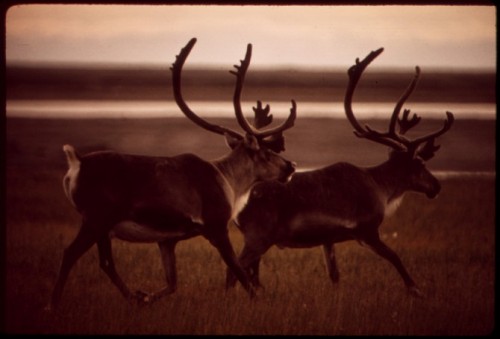
Photo: Dennis Cowals/National Archives and Records Administration

A couple of days ago, Wired Science published a selection of these photos, and you can search the archives at the National Archives (you might want to use the search instructions at the Documerica site at the Knight Center for Environmental Journalism).

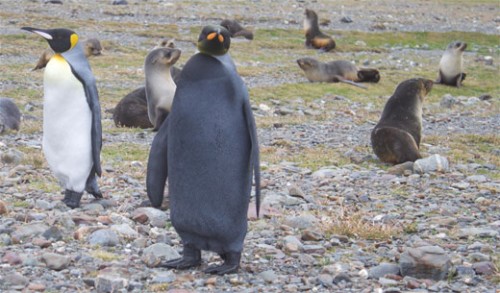
Black Swa—Penguin

Black Penguin

All-black penguins are so rare there is practically no research on the subject–biologists guess that perhaps one in every quarter million of penguins shows evidence of at least partial melanism, whereas the penguin we saw appears to be almost entirely (if not entirely) melanistic….

Observing this black penguin waddle across South Georgia’s black sand beach revealed no different behavior than that of his fellow penguins. In fact, he seemed to mix well. Regarding feeding and mating behavior there is no real way to tell, but I do know that we were all fascinated by his presence and wished him the best for the coming winter season.

Lots of discussion about this photo and this kind of coloring, plus other links, at the National Geographic blog entry about it.

Back to the Age of Muckraking?

Darren Barefoot talks a little about the difference between citizen journalists and beat or investigative reporters, and suggests a couple of methods that can be used right now to mitigate the risks of losing those supported roles:

We’re covering stories. But how often are we uncovering them? […]

  • There are examples of an emerging kind of citizen statistician, who uses access to open governmental data to uncover political or corporate malfeasance.
  • Another solution is to divide the work of one journalist among 15 citizen journalists, and have each of them attend four town hall meetings a year. Collaborative tools make this approach possible if challenging.

The more I think about it, the investigative citizen journalists of the 21st century are the activists of the 20th. They care enough about a particular topic to dig into it with enough effort and fervor to uncover new truths.

Citizen Journalism: Covering and Uncovering the News

Bat SONAR Beats FUIs

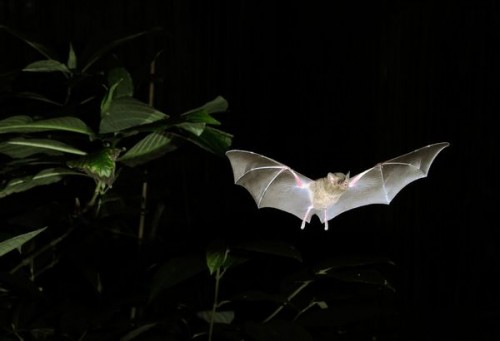
Pallas's long-tongued bat courtesy of Brock Fenton

“Drunk” bats have no trouble flying under the influence, a new study says.

Tropical bats of Central and South America regularly eat fermenting fruits and nectar. But they can fly and use their built-in “sonar” just as well while inebriated as while sober—even with blood-alcohol contents that would exceed legal limits for people.

“We went into the study fully expecting that some of the species wouldn’t be able to hold their drink,” said study co-author Brock Fenton, a biologist at the University of Western Ontario in Canada.

But “the bats, unfortunately, hadn’t read the proposal,” he said.

Read the National Geographic writeup or the full article at PLoS ONE – rest assured that the female bats were not visibly pregnant or lactating, and all bats got a chance to sober up before they headed home. The National Geographic story also has more pictures of Central American bats, as well as other fun bat links sprinkled throughout its writeup. (Bonus: boozy shrew.)

It’s Fake

This is a fun reel, showing how heavily chroma keying is used in productions. It also has a very soothing score, a song called “Lionheart,” from Emancipator’s album “Soon it will be cold enough.”

One of the things I like about this video is that the creator, Stargate Studios (who has made effects sequences for dozens of television shows, films, and other commercial video projects), makes it so easy to find the music. Also that Emancipator makes it so easy to buy their albums and individual songs from their own website. You know, and that the effects house is called Stargate.